To expand your SA contracting business to a second province, you need 30%+ profit margins for 12 consecutive months, R150,000–250,000 in startup capital, teams at 90%+ capacity, and multi-branch management software — ServCraft, Tradify and Jobber cannot handle multi-province operations. PlanMyCrew is the only affordable option with true branch separation.
Expanding your contracting business from one province to multiple is one of the most high-risk, high-reward decisions an SA contractor can make. I’ve done it — from 1 team in Cape Town to 10 teams across Western Cape, Gauteng and KwaZulu-Natal. Here’s exactly how to do it without the R80K in mistakes I made.
- When to expand: 30%+ margins for 12 months + R150K+ cash + teams at 90%+ capacity
- Best second city: Johannesburg (largest market, most insurance panel work)
- Real startup costs: R150K–250K one-time + R120K–180K/month ongoing
- Critical: You need multi-branch software — Tradify/ServCraft/Jobber cannot handle this
- Timeline to profitability: Month 3 typically
Are You Ready? The 4 Non-Negotiable Criteria
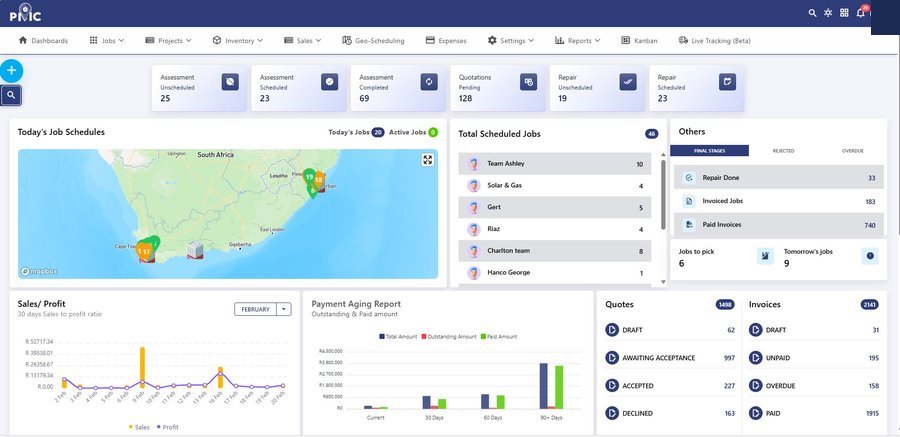
Don’t expand on ambition alone. Expand on data. You need all four of these to be true before considering a second province:
Financial Readiness
- 30%+ profit margins for 12+ consecutive months (not a one-off good quarter)
- R150,000–250,000 cash available for startup costs without touching operating capital
- Current operation completely debt-free — no loans, no overdue creditors
- 12+ months of operating costs covered in reserves for your existing operation
Operational Readiness
- Teams at 90%+ capacity consistently for at least 6 months
- Your current operation runs without you being present for decision-making every day
- Proper management software already in place — you cannot manage two provinces on WhatsApp
- 98%+ SLA compliance on your existing insurance panels (new province means new scrutiny)
Market Readiness
- Insurance panel relationships in the target city — or contacts who can refer work
- Verified demand: talk to 5–10 contractors already operating in the target city
- Understanding of regional pricing differences (Johannesburg labour costs 15–20% higher than Cape Town)
Personal Readiness
- Prepared to travel to the new province monthly for the first 6–12 months
- Have identified a trusted branch manager candidate before expansion (not after)
- Your family and personal finances can handle 6–9 months of pressure before the new branch is profitable
Warning: Expanding too early is the single most common mistake. If your current operation still needs you daily, you will damage or destroy both operations trying to manage two cities simultaneously. The expansion fails AND the original suffers.
Choosing Your Second City
Johannesburg — The Default Choice (Usually Right)
For most Cape Town-based contractors, Johannesburg is the obvious second city:
- Largest economy in SA — highest insurance panel job volume in the country
- Most Santam and OUTsurance panel work concentrated here
- Higher labour costs but also higher job values (average electrical job 18% higher than CT)
- 2-hour flight from Cape Town — manageable for monthly oversight visits
- Established insurance panel infrastructure — easier to get panel approval for new province
Durban — The Underrated Option
- 600km from Cape Town but coastal climate similar to Western Cape
- Less competition than Johannesburg, particularly from large corporate contractors
- Growing insurance market with OUTsurance and Santam expanding capacity
- Lower labour costs than JHB (10–15% cheaper)
- Port Elizabeth/Gqeberha: Less competition but significantly smaller market
The Real Costs of Multi-Province Expansion
One-Time Startup Costs (Johannesburg Example)
- Vehicle (reliable used bakkie): R80,000–120,000
- Tools and equipment (full set for 2 teams): R30,000–50,000
- Warehouse deposit (3 months upfront): R15,000–30,000
- Staff recruitment, background checks, training: R10,000–20,000
- Insurance extension to new province: R5,000–10,000
- PIRB registration for new province: R2,000–5,000
- Working capital buffer (3 months losses): R30,000–50,000
- Total one-time: R172,000–285,000
Ongoing Monthly Costs (Month 1–3)
- Branch manager salary: R25,000–35,000/month
- 2 technicians (initially): R20,000–30,000/month total
- Vehicle costs (fuel, maintenance, insurance): R15,000–20,000/month
- Warehouse rental: R5,000–10,000/month
- Materials and stock: R20,000–30,000/month
- Admin and software (PMC): R2,000–4,000/month
- Total ongoing: R87,000–129,000/month
The Software Problem Nobody Tells You About
This was my biggest mistake. I expanded to Johannesburg while still using Tradify. The software failure nearly cost me both operations.
Tradify (like ServCraft and Jobber) is a single-company system. Every team member sees every job, every inventory item, every financial record — regardless of province. When you have operations in two cities, this creates:
- Confusion: JHB manager sees CT emergency jobs, doesn’t know if he should assign them
- Cross-province inventory errors: CT teams see JHB stock levels, make wrong purchase decisions
- No financial separation: impossible to know which province is profitable independently
- Assignment errors: teams accidentally assigned to jobs in the wrong city
What Multi-Branch Software Actually Looks Like
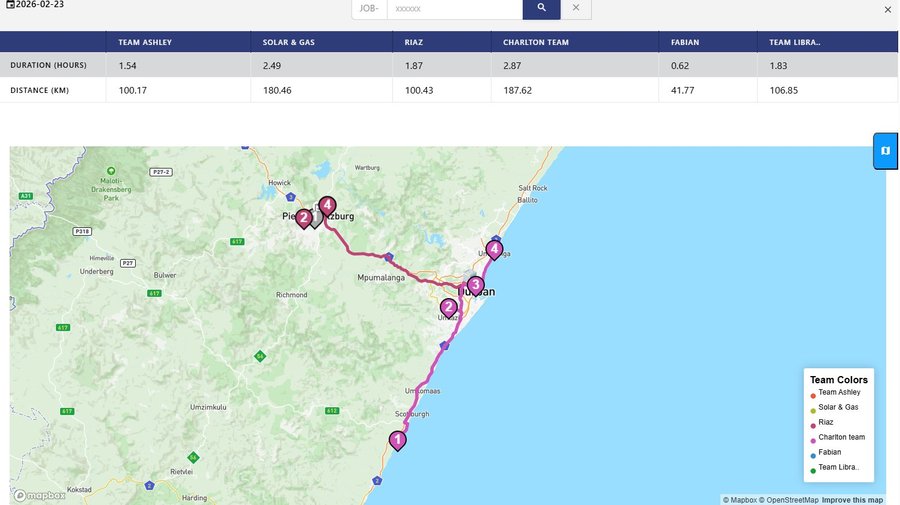
With PlanMyCrew’s multi-branch management:
- Cape Town manager sees ONLY Cape Town jobs, inventory, staff and financials
- Johannesburg manager sees ONLY Johannesburg data
- You see consolidated view of all branches simultaneously with separate P&L
- Province-level performance data: KZN at 32.8% margin, Gauteng at 26.2% — now you know where to focus
| Software | Multi-Branch | SA Insurance | Cost (10 users) |
|---|---|---|---|
| ServCraft | ✕ No | ✕ | R3,000–3,800 |
| Tradify | ✕ No | ✕ | R3,200 |
| Eworks Manager | ⚠ Limited | ✕ | R6,500–9,000 |
| PlanMyCrew | ✓ Full | ✓ Built-in | R350/user |
See the full software comparison for multi-province contractors →
Building Your Branch Team
The team makes or breaks the expansion. Your Johannesburg operation will perform exactly as well as the person you put in charge.
Hire Your Branch Manager First
This is non-negotiable. Don’t expand until you have your branch manager in place and have worked with them (or at least vetted them thoroughly). You need someone who:
- You trust completely with financial responsibility
- Has existing insurance panel experience (preferably in the target city)
- Can make job assignment decisions independently without calling you for approval
- Understands the SLA requirements and takes compliance personally
Technician Hiring Strategy
- Start with 2 teams in Month 1, not 5. Let demand drive hiring, not optimism
- Regional knowledge matters: JHB technicians know JHB traffic patterns, which routes to use for SLA compliance
- PIRB registration check: verify credentials before hiring, not after
- Trial period: 3 months before permanent employment — you need to see SLA compliance in action
Insurance Panel Setup in Your New Province
Your existing Santam and OUTsurance panel relationships may not automatically extend to a new province. The process:
- Contact your existing panel coordinator at least 3 months before planned expansion date
- Request extension of panel status to new province — they may require separate registration
- New compliance requirements: PIRB registration for new province, updated insurance to cover new area, proof of local technician credentials
- Start small: request limited panel allocation in new province for first 3 months, prove SLA compliance before asking for full volume
- Maintain 98%+ SLA compliance from day one — new province status is probationary by default
The Hidden Challenges Nobody Warns You About
Every contractor who’s expanded to a second province has a story about something they didn’t anticipate. Here are the most common surprises:
Labour Law Differences by Province
Labour law is national in SA, but enforcement and local interpretations differ by region. Johannesburg has stronger union presence in certain trades than Cape Town. KwaZulu-Natal has different informal norms around overtime and leave. You need an HR consultant or labour attorney in each province who knows the local landscape — your Cape Town HR advisor may not be fully across Gauteng specifics.
Supplier Relationships Don’t Transfer
Your Cape Town materials supplier relationship, your negotiated pricing, your credit terms — none of this transfers to Johannesburg. You start from scratch with new suppliers in each province. Budget 3–6 months to negotiate proper terms and pricing with Johannesburg suppliers, during which time you’ll be paying retail prices.
Practical fix: Contact your existing suppliers before expansion. Ask if they have a Johannesburg branch or a JHB supplier they can refer you to with a recommendation. Most national suppliers (Builders Warehouse, Bidvest, major electrical wholesale distributors) can bridge this.
Vehicle Licensing and Registration by Province
Vehicles purchased in Cape Town need to be re-registered in Gauteng within 21 days of the vehicle being “ordinarily garaged” in the new province. This is often missed by expanding contractors and results in fines. Budget R2,000–4,000 per vehicle for re-registration costs and time.
Insurance Panel Approval Timelines
Don’t assume your panel expansion will be approved quickly. Santam and OUTsurance may take 4–8 weeks to approve a new province registration, even for contractors with strong existing panel performance. Start the application process 3 months before planned expansion, not after.
The First 90 Days: Day-by-Day Priorities
The first 90 days of a new province operation determine whether it will succeed or fail. Here’s what to focus on:
Days 1–30: Establish Systems First
- Day 1: Branch manager has full PMC access, all Cape Town visibility removed from their account
- Day 3: First technicians hired, trained on mobile app, GPS enforcement active from first job
- Day 5: First jobs accepted — small volume only, close to depot, easy SLA compliance
- Day 14: Review first two weeks. Are there any GPS check-in issues? Any SLA near-misses? Fix before volume increases
- Day 30: First P&L review. Even if it’s a loss, you need the data to track trajectory
Days 31–60: Build Panel Reputation
- Target 100% SLA compliance in this period, even if it means accepting fewer jobs
- Every job in this period is an audition for preferred contractor status
- Communicate proactively with panel coordinators: introduce yourself, confirm their expectations
- Review comeback rate weekly — a new branch cannot afford comebacks in months 1–3
Days 61–90: Scale Volume
- With SLA compliance proven and systems working, accept full available volume
- Hire third and fourth technicians if demand justifies it
- Review profitability: are margins tracking towards your Cape Town benchmarks?
- Make month 4 staffing decisions based on month 3 data, not month 1 optimism
Managing the Expansion From Cape Town
The question every expanding contractor asks: how do I manage two operations from one location? The honest answer: you don’t manage day-to-day operations in Johannesburg from Cape Town. Your branch manager does. Your job is to manage the branch manager and the system.
What You Handle from Cape Town
- Weekly branch performance review (PMC consolidated dashboard, 30 minutes)
- Branch manager check-in (weekly call, 45 minutes)
- Major hiring decisions (your approval, branch manager recommendation)
- Panel relationship issues (formal complaints, SLA warning responses)
- Financial decisions above a threshold (you set the number, typically R5,000)
What Your Branch Manager Handles in Johannesburg
- All day-to-day job assignment and scheduling
- Technician management (performance, discipline, leave)
- Materials procurement (within monthly budget)
- Customer relationship management
- Panel coordinator relationships (daily operational level)
Monthly Trips to the New Province
In the first 6 months, plan one trip per month to the new province. Typical agenda:
- Day 1: Field time with technicians (ride along on 2–3 jobs, see operations firsthand)
- Day 1 evening: Branch manager dinner (relationship, feedback, concerns)
- Day 2 morning: Office/warehouse review (stock levels, admin processes, any issues)
- Day 2 afternoon: Panel coordinator meeting (if possible, a face-to-face builds relationships that email cannot)
Financial Management Across Provinces
The moment you have two provinces, you need two sets of financial records. Not for tax purposes necessarily — for business intelligence. You need to know:
- Which province is more profitable (margin %, not just revenue)
- Which province has better SLA performance (affects job allocation from panels)
- Which province has higher material costs (supplier negotiation opportunity)
- Which province has higher labour efficiency (jobs completed per technician per day)
PlanMyCrew’s province-level P&L separation gives you this data automatically. Before PMC, I was doing this manually in Excel once a month and getting it wrong half the time. The decisions you make from correct financial data vs guesswork are fundamentally different.
When to Expand to a Third Province
The decision to add a third province should be made on the same criteria as the second — but from a higher baseline. By the time you’re considering Province 3, you should have:
- Province 2 consistently at 30%+ margins for at least 6 months
- Both existing provinces running without significant founder involvement
- Management structure capable of supporting three independent branches simultaneously
- Cash reserves sufficient to absorb Province 3 losses without stressing existing operations
My own experience: I added KwaZulu-Natal 12 months after Johannesburg was established. Johannesburg reached stable 28% margins at Month 7, which I felt was close enough to my 30% target to proceed. In retrospect, I should have waited until Month 10 when JHB reached 31%. An extra 3 months of patience would have made the KZN expansion less stressful.
Month-by-Month Timeline
- Month -3: Identify branch manager candidate, begin panel registration discussions, secure warehouse lease, order vehicle
- Month -2: Hire branch manager, begin technician recruitment, set up PMC multi-branch structure
- Month -1: Hire first 2 technicians, conduct training, soft launch with limited job volume to test systems
- Month 1: Full operations. Expect a loss (R30,000–60,000 typical). Focus on SLA compliance and process establishment, not revenue
- Month 2: Revenue building. Usually approaching break-even by end of month
- Month 3: Profitable if SLA compliance strong and panel volume is flowing. Target 30%+ margins matching existing operation
- Month 6: Performance review. Is this province meeting targets? Decision to scale further (hire more teams) or hold at current size
The single most important thing: Maintain 98%+ SLA compliance from Week 1 in the new province. Your new branch has no track record. One bad month early on can set your panel status back by 6–12 months.
Province-by-Province Breakdown: What to Expect
Western Cape to Gauteng
The Cape Town to Johannesburg expansion is the most common move for SA trade contractors. Key considerations specific to this route:
- Market size: Greater Johannesburg has 3x the population of Cape Town metro. Insurance panel job volume is proportionally higher, but so is contractor competition.
- Work type differences: Johannesburg has a higher proportion of multi-unit residential developments (townhouse complexes, sectional title) vs Cape Town’s predominance of freestanding homes. This affects geyser sizes, access logistics, and body corporate payment processes.
- Seasonal differences: Johannesburg’s electrical storms (October–March) generate surge-related electrical claims that don’t exist in Cape Town. Build this into your capacity planning.
- Panel relationships: Digicall and OUTsurance have strong Gauteng operations. Your existing relationship with these panels gives you a starting point, but you will need a fresh panel registration for the Gauteng branch specifically.
- Language: Some customer interactions in Gauteng will involve Zulu, Sotho, or Tswana. Having at least one multilingual technician on the Gauteng team significantly improves customer service.
Western Cape or Gauteng to KwaZulu-Natal
- Market characteristics: Durban metro (eThekwini) is SA’s third-largest city and has significant insurance panel activity. The Midlands and coastal areas (Ballito, Umhlanga) are growing rapidly with new development creating new panel demand.
- Competition level: Lower than both Cape Town and Johannesburg. Fewer large multi-province contractors operate in KZN, which means less competition for panel allocation from the major insurers.
- Climate considerations: KZN’s subtropical climate creates different failure patterns — higher humidity drives electrical corrosion issues, summer storms generate different claim types than winter in CT or summer electrical in JHB.
- Logistics: KZN is 600km from Cape Town (manageable flight) but 600km from Johannesburg via the N3 (one of SA’s most congested national roads). Monthly oversight visits from JHB require careful scheduling.
The Multi-Province Operations Model: Year 2 and Beyond
Year 1 of multi-province operations is about establishment and survival. Year 2 is when the model either starts paying off significantly or reveals structural problems that weren’t visible in the chaos of expansion.
Year 2 Targets
- All provinces at 30%+ margins consistently (if any province is below 25% margin by Month 18, investigate seriously)
- Your personal time involvement in day-to-day operations: less than 2 hours per day across all provinces
- No province requiring more than a monthly oversight visit from you
- Cross-province financial performance visible and actionable in real time
Cross-Province Resource Sharing
By Year 2, you can start optimising across provinces in ways that aren’t possible in Year 1:
- Seasonal load balancing: Cape Town geyser season (winter, June–August) and Johannesburg electrical storm season (October–March) don’t overlap. Temporarily moving a technician from CT to JHB during CT’s quiet summer months and vice versa can smooth revenue across the year.
- Centralised procurement: Once operating at scale across 3 provinces, your annual materials spend qualifies for national supplier pricing. Negotiate centrally, deploy regionally.
- Training economies: Run skills training in one province with participants from all three. More cost-effective than province-by-province training and builds cross-province team culture.
Common Multi-Province Expansion Mistakes (And How to Avoid Them)
Mistake 1: Expanding Too Fast to Province 3
The momentum of a successful Province 2 expansion often creates pressure to add Province 3 quickly. Province 2 is profitable, the model is proven, Province 3 seems like pure upside. It isn’t.
Province 3 requires that Province 2 is genuinely stable and running without founder involvement — not just profitable. If your Johannesburg branch manager is still calling you 3–4 times per week for decisions, adding KwaZulu-Natal means you’re now getting 6–8 calls per week from two provinces, and your Cape Town operation suffers from lack of attention. Wait until Province 2 is truly autonomous before adding Province 3.
Mistake 2: Identical Team Structures Across Provinces
What works in Cape Town may not work in Johannesburg. The team structure that works in Johannesburg (perhaps heavier on multi-unit residential, larger teams to cover the geography) may not work in Durban. Each province’s team structure should be optimised for that market, not copied from the previous province.
Mistake 3: Single Banking for Multi-Province
Running all three provinces through a single bank account creates financial clarity problems and tax complications. Set up a separate bank account per province branch. The monthly financial separation exercise becomes trivial — your bank statements already separate the income and expenses. PMC’s province-level P&L then maps cleanly to the banking structure.
Mistake 4: No Succession Planning for Branch Managers
Your entire Johannesburg operation depends on one person: your branch manager. If they leave, get ill, or underperform, you have an immediate crisis. From Month 6, start identifying your second-in-command in each province — a senior technician who could step up to branch manager if needed. Build their management skills deliberately.
Managing Multiple Provinces? PMC Was Built for This.
True multi-branch management with separate P&L per province. See exactly which branch is profitable. 30-day free trial.