Underpricing is the most common financial mistake in contracting. The quote calculator below builds a complete price from labour, materials, travel and overhead — so you know your profit before you commit to a job, not after.
Why most contractors underprice their work
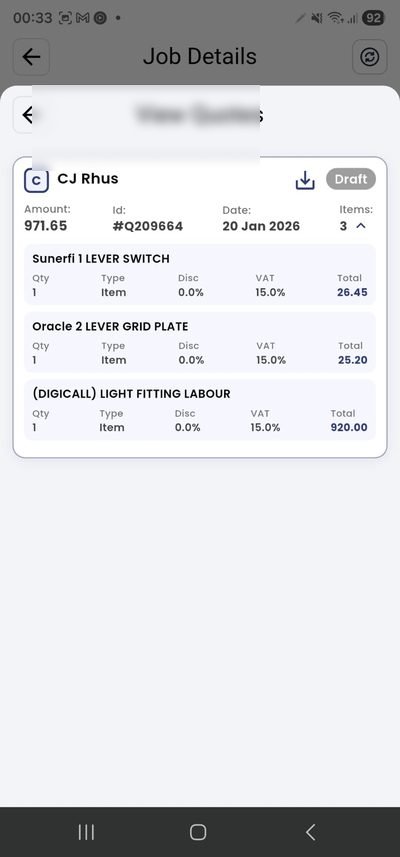
The problem is not the hourly rate — most contractors know what they charge per hour. The problem is everything that gets left out of the calculation. Materials markup is forgotten. Travel time is absorbed. Admin time is invisible. Overhead is guessed at. The result is a quote that looks profitable until you actually add up the costs, by which point the job is already committed.
Build your quote below
Select your trade for a typical starting rate, then adjust all the inputs to match your actual costs. The breakdown at the bottom shows exactly what each component contributes to the total quote.
The overhead percentage most contractors get wrong
Overhead is everything you pay to run your business that is not directly tied to a specific job: vehicle costs, insurance, tools and equipment, licensing, accounting, software subscriptions, and your own unbillable time. Most contractors set overhead at 10–12% but the real number is closer to 15–20% when everything is counted properly.
To calculate your actual overhead percentage: add up all monthly fixed and semi-fixed business costs, divide by monthly revenue, and that is your overhead rate. Most contractors are surprised to find it is higher than they thought.
Materials markup: what is fair and what is standard
A 20% materials markup is standard in South African trade contracting. It covers the time spent sourcing and procuring materials, the working capital tied up in materials between purchase and payment, breakage and wastage, and storage. On large commercial jobs with high materials value, 15% is more typical. On small residential jobs with low materials cost, 25% is defensible.
Quoting for insurance panel work
Panel work typically has fixed call-out and labour rates set by the insurer. Your quoting flexibility is mainly on materials markup (check your panel agreement for maximum allowed markup) and efficient job completion (completing jobs faster than the time allowance improves effective margin). Use the calculator above to understand your margin at the panel's fixed rates before accepting panel work.
When your quote does not win the job
If you are consistently losing quotes on price, the answer is rarely to cut your margin. It is usually to cut your costs — specifically admin costs that inflate your overhead rate. Contractors with automated job management typically have 3–5% lower overhead rates than those doing admin manually, which creates genuine competitive room to price more aggressively without sacrificing margin.